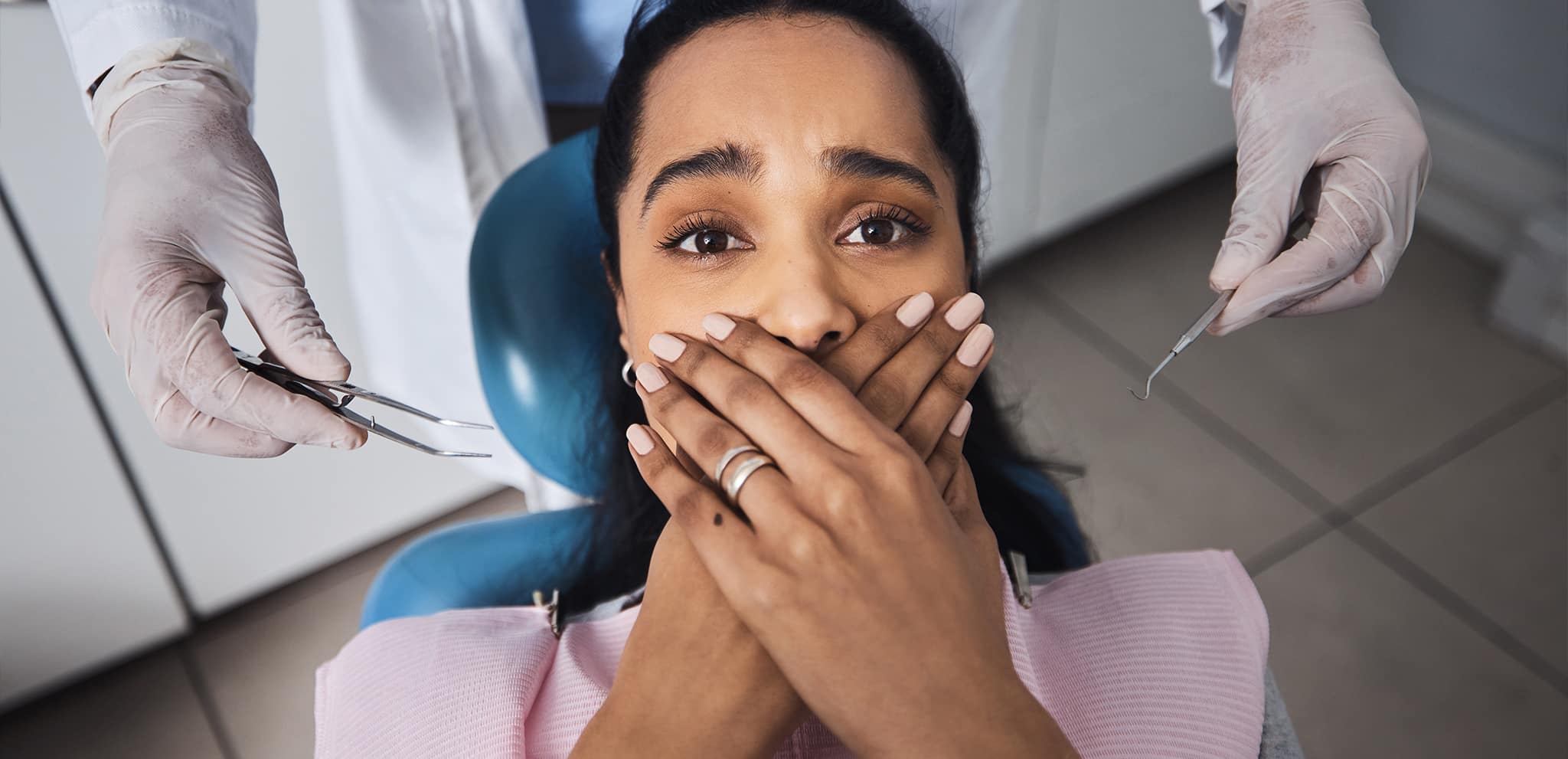
Fear of the Dentist: What’s Really Behind It
Fear of the dentist is widespread. Estimates suggest that around 10 million people in Germany suffer from it. Many more at least feel uneasy when thinking about an appointment. Many are ashamed of it. Yet every fear of the dentist has an understandable cause. If you understand where your fear comes from, it becomes easier to find a way to deal with it.
Where does fear of the dentist come from?
Fear of visiting the dentist rarely starts with the dentist themselves. In most cases, it is rooted in earlier experiences that the nervous system has stored as threatening. These memories can still be triggered decades later—by a smell, a sound, or even just the thought of an appointment.
A study by the University of Hong Kong with over 1,000 patients showed that nearly half of those affected by dental anxiety had traumatic experiences with dental treatment in childhood. In another study, 86 percent reported distressing experiences in the dental chair, 70 percent of them during childhood.
These are not isolated cases. They are understandable reactions to real experiences.
The most common causes at a glance
Painful experiences in the past
Pain during a treatment that no one warned you about leaves a mark. Especially if it happens in childhood, it becomes deeply ingrained. The body learns: this situation is dangerous. And it reacts accordingly next time—even if the situation is objectively safe.
The feeling of loss of control
In the dental chair, you lie back with your mouth wide open, unable to speak, with instruments above your face, someone else’s hands or fingers in your mouth, and little ability to control the situation yourself. For many people, this feeling of being at the mercy of the situation is the most stressful part—not the potential pain of treatment itself. Loss of control is one of the most commonly cited causes of severe dental anxiety.
Learned fear from the environment
Fear of the dentist does not always have to be experienced firsthand—it can also be learned. Children who observe parents or caregivers reacting anxiously to dental visits often unconsciously adopt this pattern. Stories from friends, jokes about the dentist, or dramatic portrayals in films and TV reinforce this effect.
Shame and the vicious cycle
Those who haven’t been to the dentist for a long time often develop shame as well. Their teeth may be in poor condition, appointments have been repeatedly postponed, and now the fear of treatment is joined by fear of being judged. This keeps many people from even making a call.
But fear of the dentist is not a weakness. It has a cause—and it deserves to be taken seriously.
What happens in the body during dental anxiety?
When the brain evaluates a situation as threatening, the body activates its classic stress response. Stress hormones like adrenaline and cortisol are released. The heart beats faster, muscles tense up, and breathing becomes shallower.
This is not a sign of being overly sensitive—it is an ancient survival mechanism. The problem: in the dental chair, neither fight nor flight is possible. The stress has no outlet and manifests as tension, trembling, or the urge to cancel the appointment.
Why come early despite the fear?
Those who keep postponing the appointment make the problem worse on two levels. The fear itself increases because avoidance never gives it a chance to change. At the same time, the need for treatment grows. What could have been solved with a minor issue eventually requires a more extensive procedure.
A first appointment does not have to be a treatment appointment. Many practices offer the option to simply talk first: What am I afraid of? What happened in the past? What do I need to feel safe? These conversations help build trust and remove much of the perceived threat.
Every positive experience at the dentist changes what the brain has stored. It doesn’t happen overnight—but it does happen.
What helps with fear of the dentist?
There is no one-size-fits-all solution. What helps depends on the origin and severity of the fear. Some approaches have proven effective:
Talk openly about your fear: Mention your dental anxiety when making the appointment. A good practice will adapt, allow more time, and explain each step in advance.
Agree on a stop signal: A clear hand signal that immediately stops the procedure gives back a sense of control. Just knowing you can pause at any time significantly reduces tension.
Take it step by step: If you haven’t been to the dentist in a long time, you don’t have to do everything at once. Start with a consultation, then a check-up, then small treatments if needed. Every completed step is a success.
Use relaxation techniques: Slow, deep breathing activates the parasympathetic nervous system and reduces the body’s stress response. Inhale for four seconds, hold briefly, exhale for six seconds. This also works in the dental chair.
Seek professional support for severe dental phobia: Cognitive behavioral therapy shows strong results for dental anxiety. A German study with 160 participants found that after an average of five sessions, 70 percent were able to successfully complete dental treatment. Costs are usually covered by statutory health insurance.
Modern treatment methods: Today’s methods usually ensure that little to no pain occurs. If the fear is still too strong, treatments under sedation or even general anesthesia are options.
Summary
Fear of the dentist does not arise out of nowhere. It has causes—often rooted in earlier experiences, frequently from childhood. The feeling of loss of control, unexpected pain, or learned fears from the environment can leave a deep imprint. Understanding this helps you stop feeling ashamed—and start finding a way forward.
At ZAHNGENIAL, we take dental anxiety seriously. If you want to take a first step, you can schedule an appointment where the focus is simply on talking. No pressure for treatment, no judgment—just a conversation at your pace. Short-notice appointments are available via our free service number or through Doctolib.
Frequently Asked Questions About Dental Anxiety
Is fear of the dentist normal?
Yes. Around two-thirds of people feel at least some discomfort when visiting the dentist. An estimated 10 million people in Germany experience severe dental anxiety. You’re not alone.
Where does dental anxiety usually come from?
Most often from early negative experiences, especially in childhood. Pain without warning, the feeling of loss of control, or learned fears from the environment are typical triggers.
What is the difference between dental anxiety and dental phobia?
Dental anxiety describes general discomfort up to strong nervousness. Dental phobia is a clinically recognized anxiety disorder where even thinking about an appointment triggers physical reactions like a racing heart or nausea, leading to long-term avoidance.
Do I have to be treated at the first appointment?
No. A first appointment can consist solely of a conversation. You can explain what you’re afraid of, ask questions, and get to know the practice and team—without any treatment taking place.
Does behavioral therapy help with dental anxiety?
Yes. Cognitive behavioral therapy is considered the most effective psychological method for dental anxiety. Studies show that even a few sessions can significantly reduce fear. Costs are usually covered by statutory health insurance.
What can I do myself before going to the dentist?
Mention your fear in advance, bring a companion, choose a calm time of day, and practice breathing exercises. And most importantly: be honest with the practice about what scares you. This allows for a personalized approach to your treatment.