Periodontitis: Causes, Consequences and What You Can Do About It
Around 35 million people in Germany are affected by periodontitis, many of them without knowing it. The disease progresses without pain for a long time and therefore often goes undetected for years. Yet the first warning signs are often there early on: bleeding gums when brushing or persistent bad breath. Understanding how periodontitis develops and what consequences it has allows you to act in time and protect your periodontium for the long term.
From Gum Inflammation to Periodontitis
It all starts with dental plaque. Every day, a thin biofilm of bacteria, saliva components and food residue forms on the teeth. This plaque is soft at first and can be removed by thorough brushing. If it stays on the teeth too long, it hardens into tartar. Tartar makes the tooth surface rough and provides ideal conditions for bacteria to multiply further.
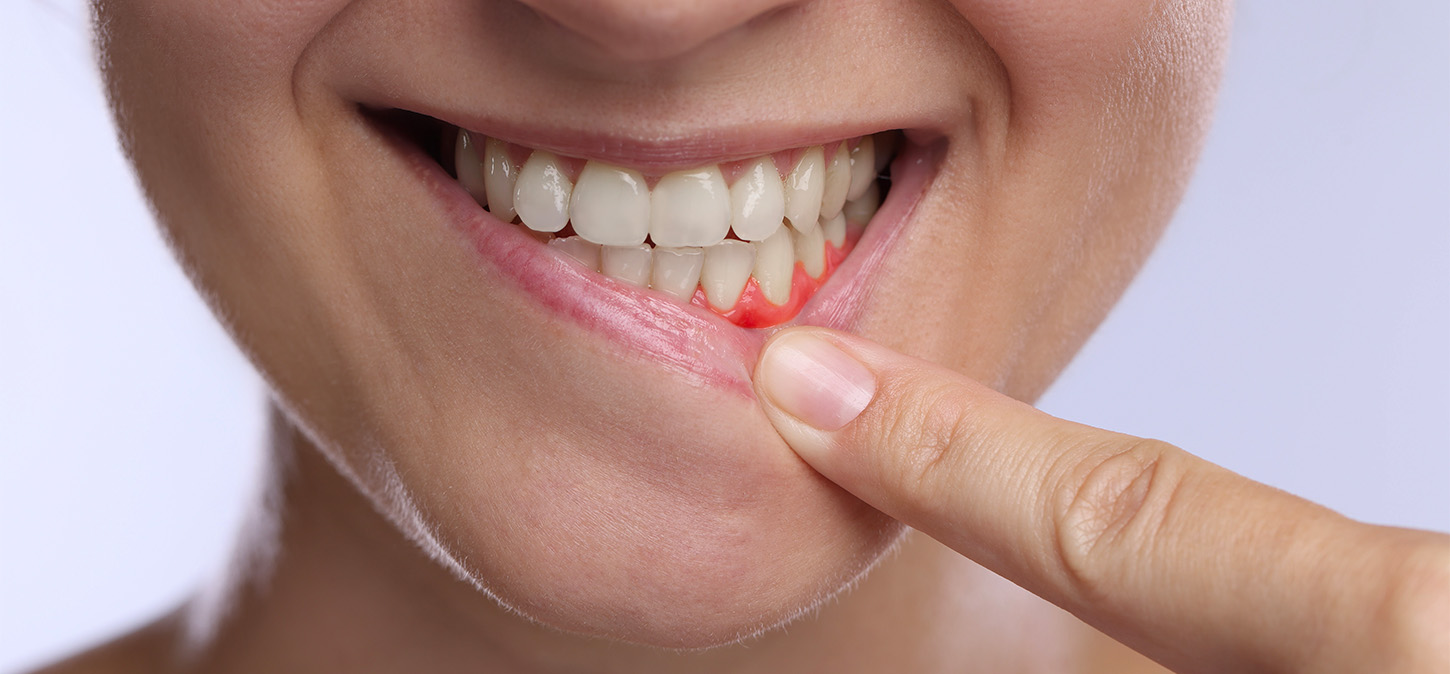
The gums respond to the bacterial load with inflammation: they turn red, swell and bleed when brushing. This early form is called gingivitis, meaning inflammation of the gums. At this stage it is still fully reversible. Improving your oral hygiene and having your teeth professionally cleaned now can stop the inflammation.
If gingivitis is ignored, the bacteria move deeper. The gums detach from the tooth, and periodontal pockets form. Bacteria collect there that neither a toothbrush nor floss can reach. The inflammation spreads to the bone and the supporting fibres. The body tries to defend itself and in doing so releases bone-resorbing cells. The teeth gradually lose their hold. In the advanced stage, they can become loose and fall out.
This process is what dentists call periodontitis. It progresses gradually, over months or years, and hardly hurts at first.
How Do I Recognise Periodontitis? The Most Important Warning Signs
The insidious thing about periodontitis is that it causes few symptoms for a long time. Paying attention to the early signs allows you to take action in time.
Typical warning signs include:
- Bleeding gums when brushing or under light pressure
- Red, swollen or sensitive gums
- Persistent bad breath despite good oral hygiene
- Visible gum recession, making teeth appear longer
- Sensitivity to cold, heat or sweets
- Loose teeth or a change in your bite
Bleeding gums are not a harmless side effect of brushing too hard. They are almost always a sign of inflammation and should be taken seriously. Most people would treat an open wound elsewhere on the body straight away. Bleeding gums, on the other hand, are often ignored.
Who Is Particularly at Risk?
The risk of developing periodontitis is not the same for everyone. Besides poor oral hygiene, there are other factors that influence its course.
Smoking is one of the strongest modifiable risk factors. According to the National Association of Statutory Health Insurance Dentists (KZBV), smokers have a two- to sevenfold higher risk of the disease than non-smokers. Nicotine weakens the immune system and impairs blood flow to the gums. On top of that, smoking suppresses gum bleeding, making warning signs even harder to spot.
Diabetes is also directly linked to the disease. Poorly controlled diabetes promotes inflammation in the body. Conversely, untreated periodontitis worsens blood sugar control.
Stress, hormonal changes such as during pregnancy, and genetic predisposition also play a role. Around one third of susceptibility to periodontitis is attributed to hereditary factors.
Periodontitis and Its Effects on the Whole Body
Periodontitis is not purely a local disease of the mouth. Bacteria from inflamed periodontal pockets can enter the bloodstream and trigger inflammatory reactions throughout the body.
Studies show links between untreated periodontitis and cardiovascular disease, stroke and diabetes. Respiratory diseases can also be promoted when bacteria from the mouth reach the lungs. Pregnant women with advanced periodontitis have an increased risk of premature birth and complications.
Oral health and general health are therefore more closely connected than many people assume.
Take the Paro-Check: Am I Affected?
If you want to know how high your personal risk is, you can use the free self-test from the German Society of Periodontology (DG PARO). At selbsttest.dgparo.de, you can assess in just a few clicks whether warning signs are present and whether a dental appointment makes sense. The earlier periodontitis is detected, the better it can be treated.
How Is Periodontitis Treated?
Periodontitis does not heal on its own. It requires dental treatment, which takes place in several steps.
First, we record what is known as the periodontal status: the depth of the periodontal pockets is measured at every single tooth. X-rays show the extent of bone loss. On this basis, an individual treatment plan is drawn up.
At the core of the therapy is thorough cleaning of the periodontal pockets. Plaque and tartar are removed above and below the gum line, and the root surfaces are smoothed. Afterwards, bacteria find it much harder to attach.
After treatment, regular check-ups follow. They secure the result and detect early on whether the inflammation has returned. In advanced cases, surgery may be necessary to make deep pockets accessible.
Bone that has been lost cannot be fully regenerated. But the process can be brought to a standstill, and your remaining dental health can be preserved for the long term.
How Can Periodontitis Be Prevented?
Periodontitis is not a matter of fate. Consistent oral hygiene and regular professional care can reduce the risk considerably.
The most important everyday measures:
- Brush your teeth thoroughly twice a day for at least two minutes
- Clean between your teeth daily with floss or interdental brushes
- Have a professional teeth cleaning at least twice a year
- Cut down on or quit smoking
- If you have diabetes, keep your blood sugar well controlled
- Do not ignore warning signs such as bleeding gums
If you notice bleeding gums or other signs, do not wait. The sooner treatment begins, the less damage there will be to the periodontium.
Summary
Periodontitis develops gradually, causes no pain for a long time and affects millions of people in Germany who are unaware of it. Bleeding gums and bad breath are not trivial matters but possible early signs. Acting now protects not only your teeth but also your general health.
At ZAHNGENIAL, we offer periodontitis treatment at all three of our locations in Wiesbaden. If you notice warning signs or would like to know the condition of your periodontium, feel free to book an appointment. Short-notice appointments are available via Doctolib or our free service number.
Frequently Asked Questions About Periodontitis
What is the difference between periodontitis and periodontosis?
Periodontitis is a bacterial inflammation of the periodontium. Periodontosis describes non-inflammatory gum recession and is hardly used in medicine anymore. In everyday language, the two terms are often used interchangeably. What is meant is almost always periodontitis.
How can I tell if I have periodontitis?
Typical early signs are bleeding gums when brushing, red or swollen gums and persistent bad breath. In the advanced stage, gum recession and loose teeth can follow. Only a dentist can make a reliable diagnosis.
Can periodontitis be cured?
The process can be stopped and your remaining dental health preserved for the long term. However, bone that has already been lost cannot be fully regenerated. That is why early treatment is crucial.
Does health insurance cover the treatment?
Yes. Since 2021, systematic periodontitis treatment has been covered by statutory health insurance in Germany. After a preliminary examination and an approved application, the treatment is fully covered.
What is the Paro-Check?
The Paro-Check is a free self-test from the German Society of Periodontology at <a href=”https://selftest.dgparo.de”>selftest.dgparo.de</a>. It helps you assess your personal risk and recommends whether a dental appointment makes sense.
Can I treat periodontitis myself?
No. Existing periodontitis requires dental treatment. What you can do yourself is significantly reduce the risk through good oral hygiene, regular professional teeth cleaning and quitting smoking.
How are periodontitis and heart disease connected?
Bacteria from inflamed periodontal pockets can enter the bloodstream and trigger inflammatory reactions in the body. Studies show a link between untreated periodontitis and an increased risk of cardiovascular disease and stroke.

Zahnmedizinische Fachassistentin (ZMF) im MVZ ZAHNGENIAL – Goldgasse
Frau Ott hat mehr als 20 Jahre praktische Erfahrung mit dem Schwerpunkt Prophylaxe. Sie ist zudem freiberuflich tätig als Sport-/ Mental-Coach, Referentin und Autorin.